Arte Xávega
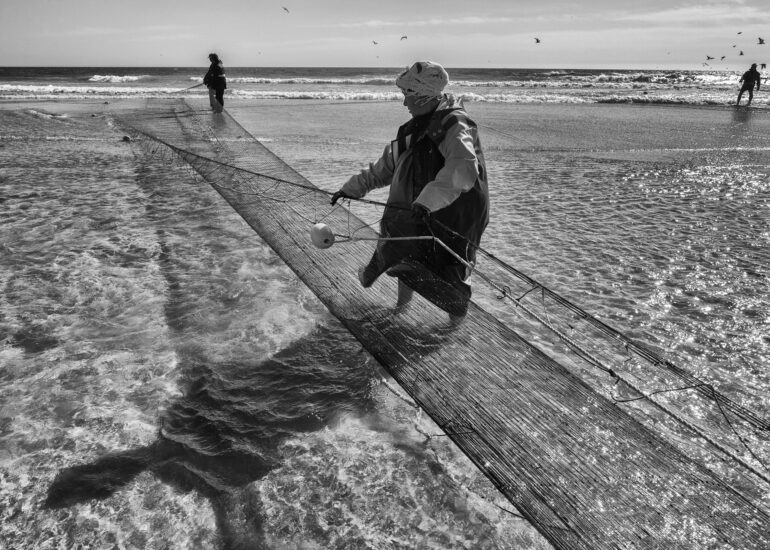
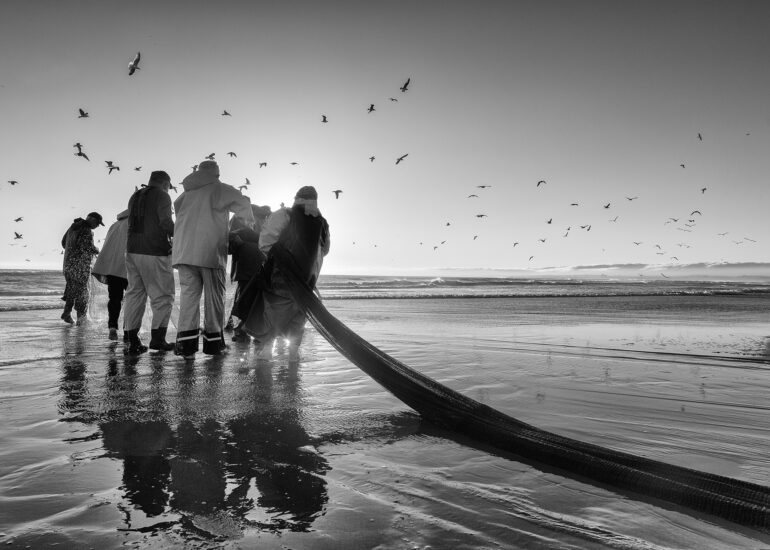
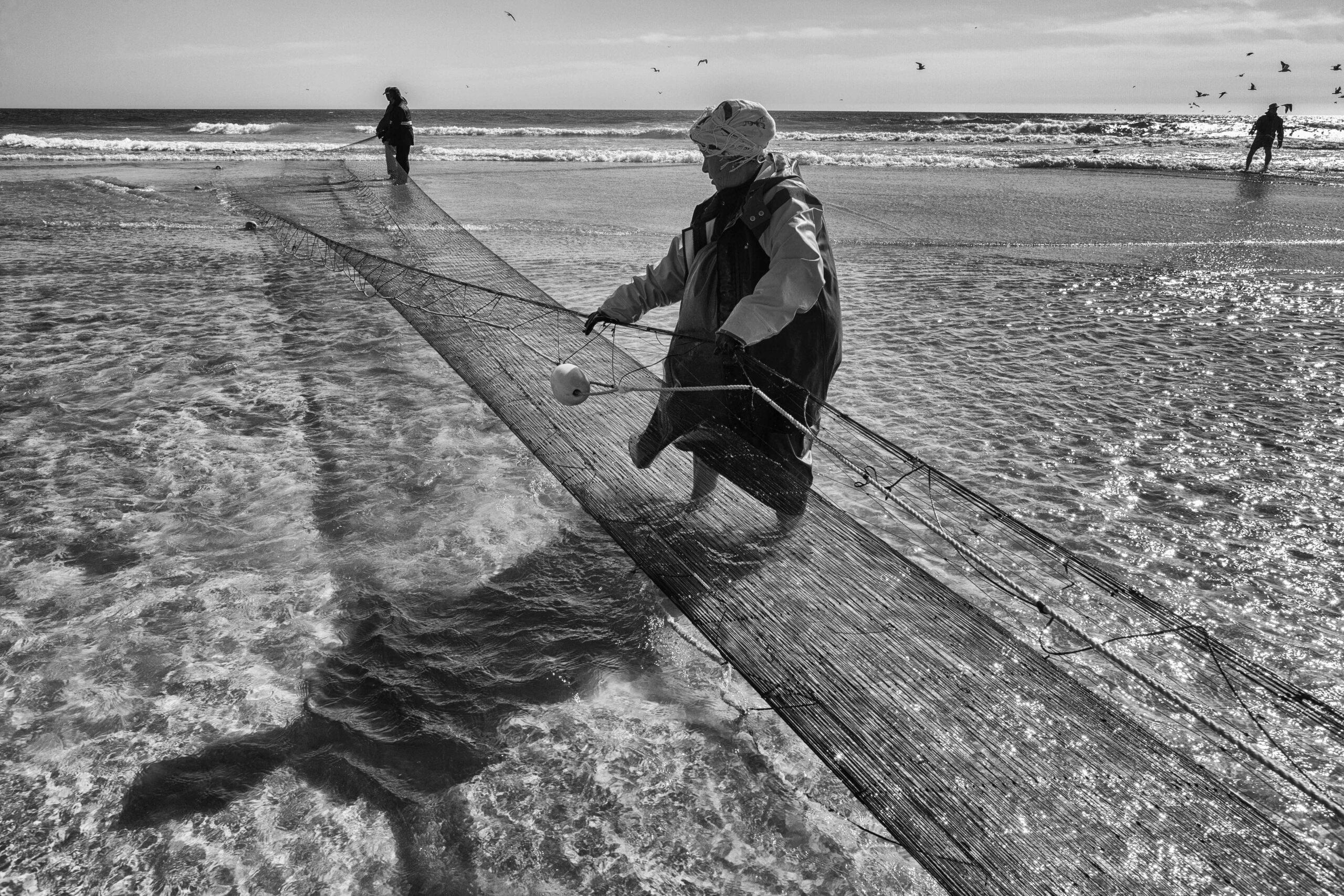
Members of the crew of “Canope” boat help with dragging the fishing net back to the beach. Still human labour is needed to ensure that the net, triangular with two open ends, does not open when dragged back, preserving all the captured fish at its conical end
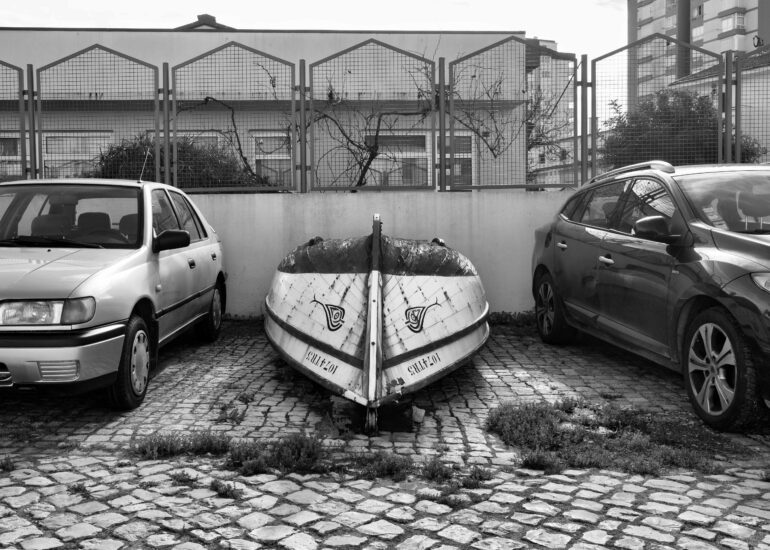
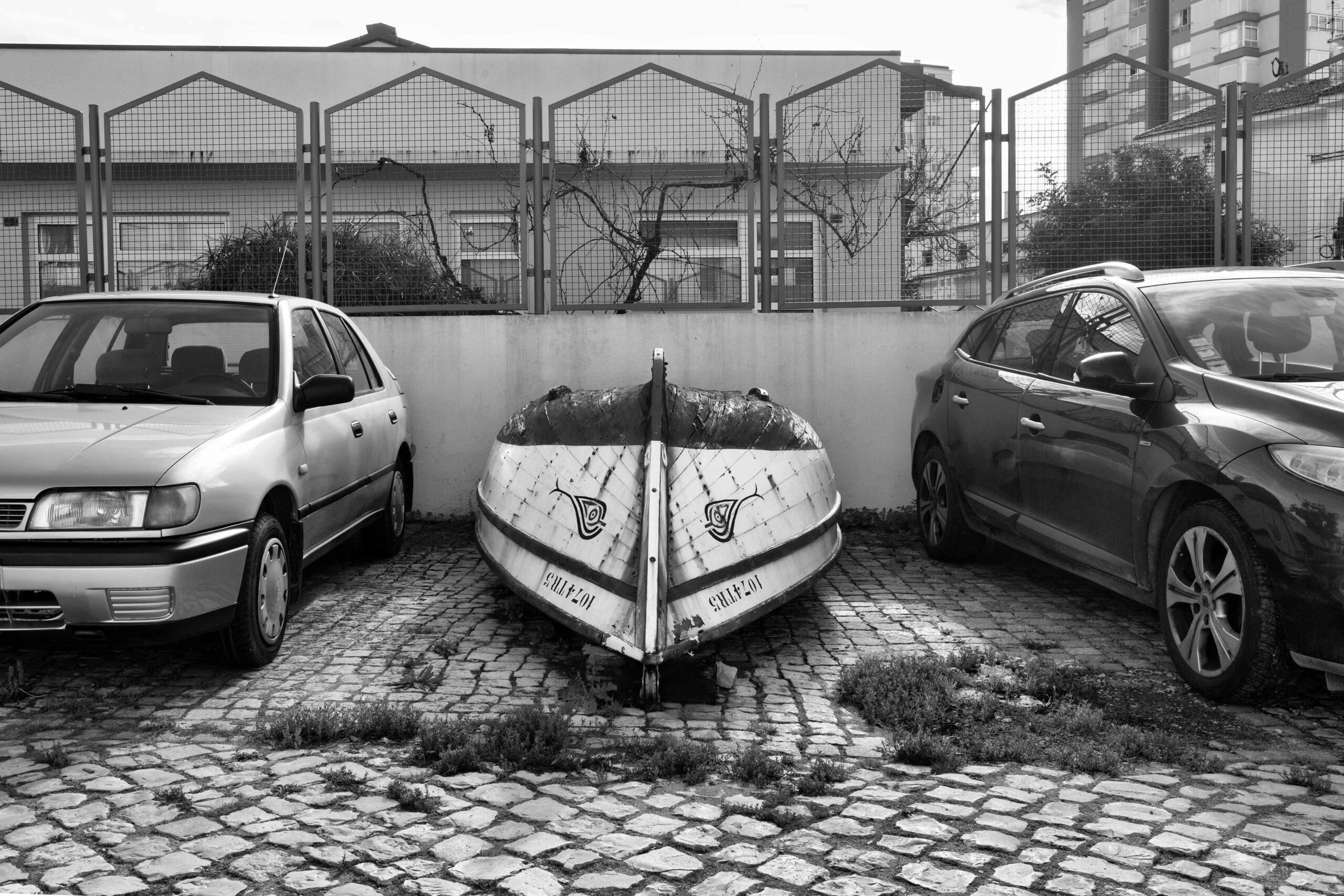
An old boat is parked between cars in the Bairro dos Pescadores. The stylised fish painted on both of its sides became almost a logo, one of the symbols of the fishing community of Costa de Caparica
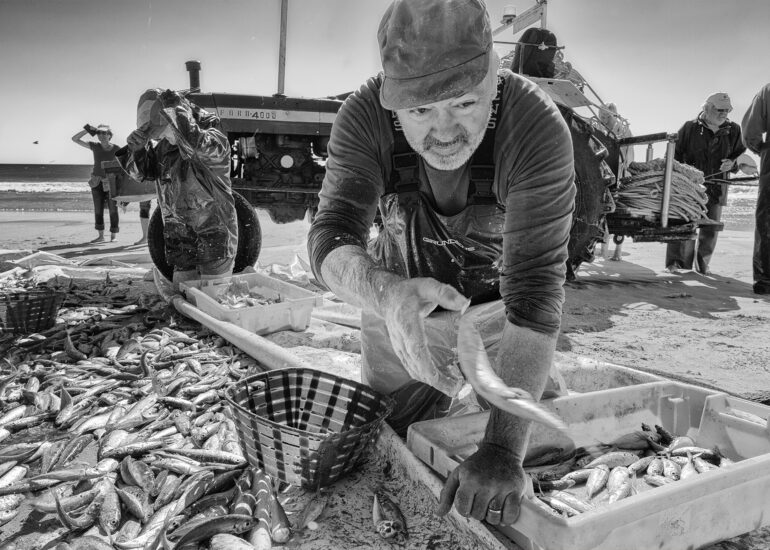
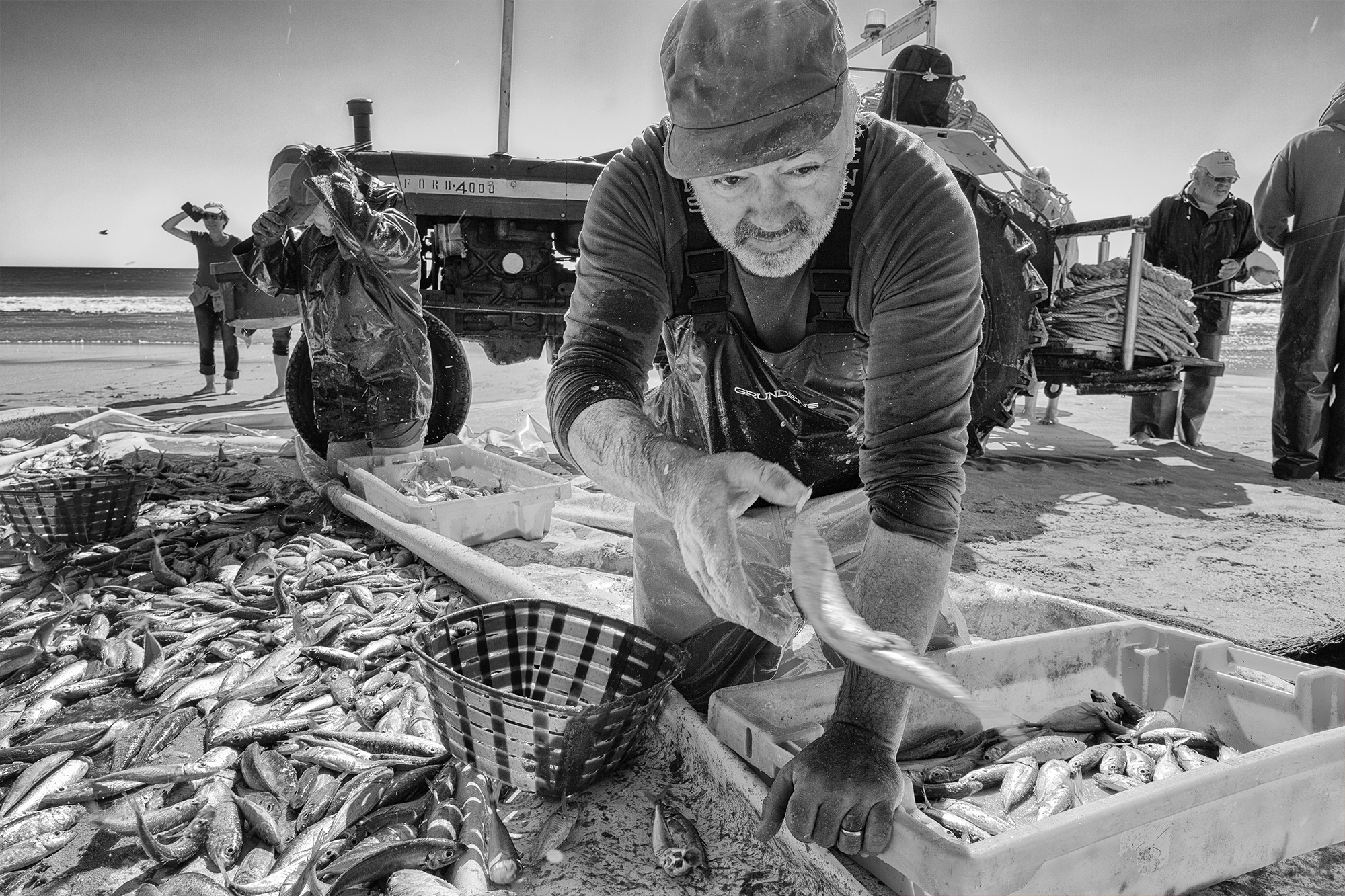
The collection of the fish. After the net is dragged on the beach and opened, the “companha de terra” takes care of collecting the fish into flat plastic crates. The fish is sorted on the ground of specie and size, to be then washed off with sea water
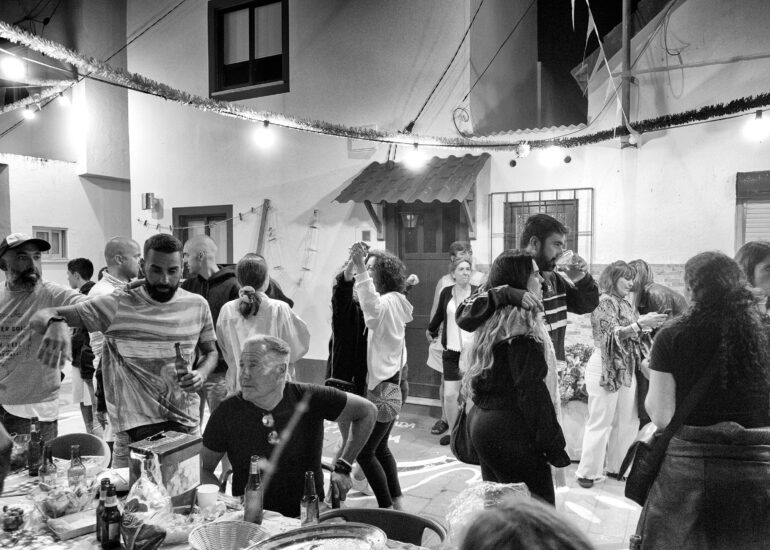
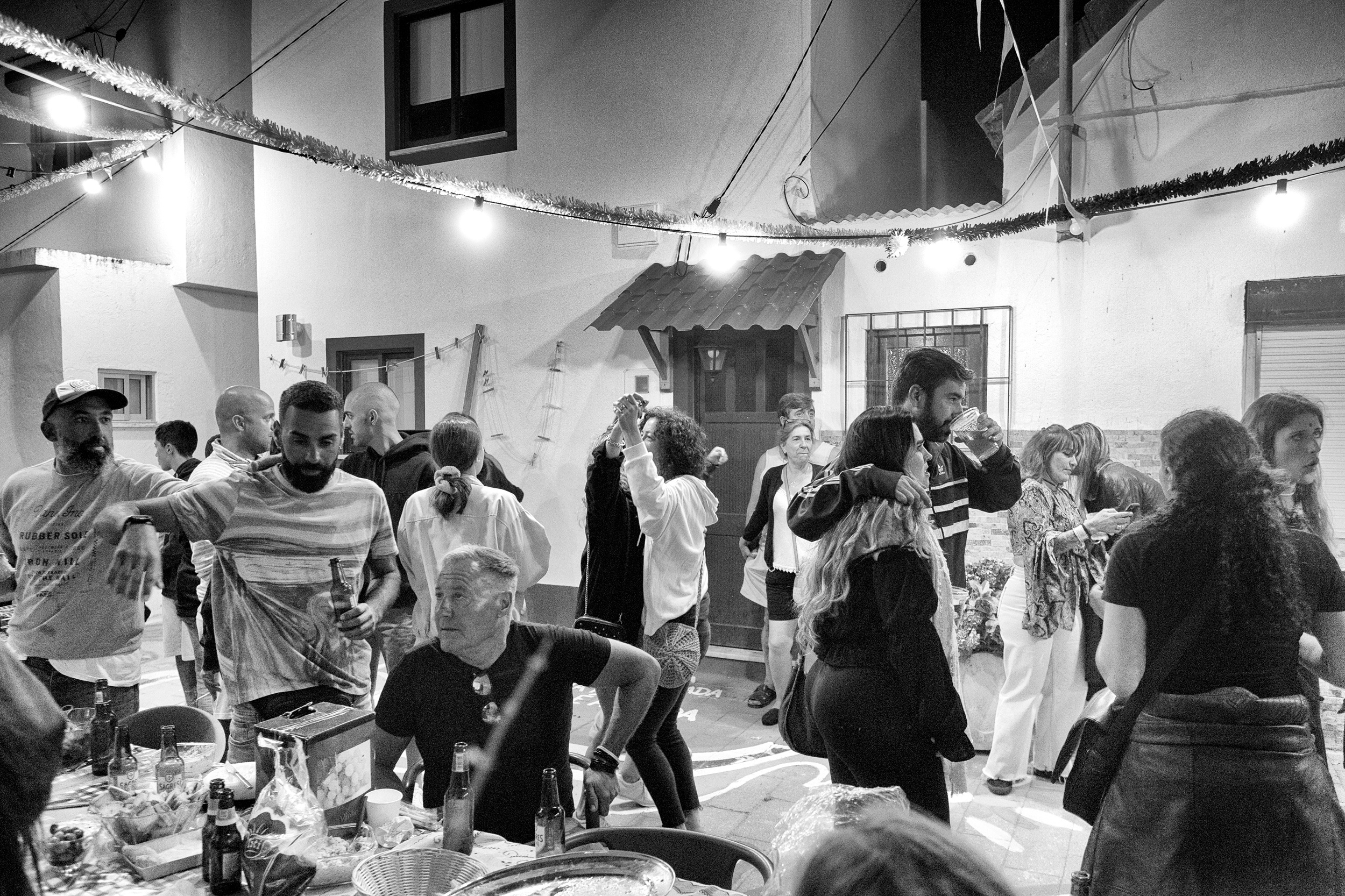
São João (St. John) parties in Rua Quinze in the Bairro dos Pescadores. In June the most felt and participated party of the “Santos Populares” (“popular Saints”) is St. John's day's eve, when music and dance frame a collective banqueting, typically based on grilled sardines
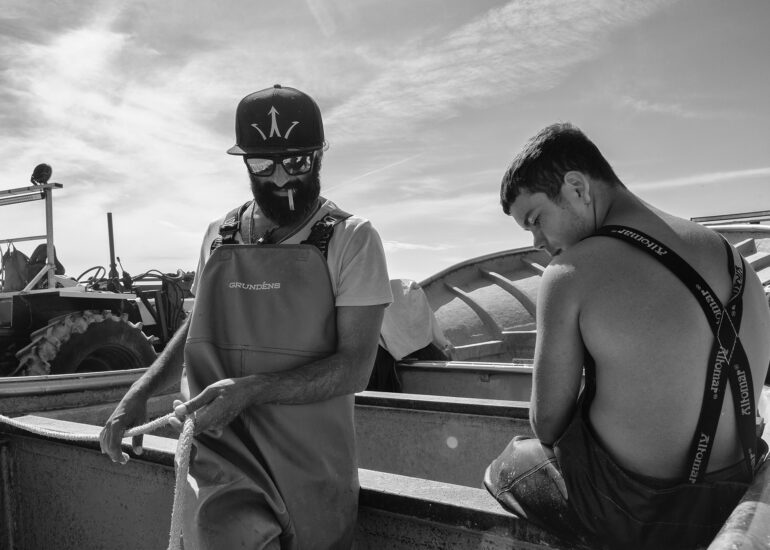
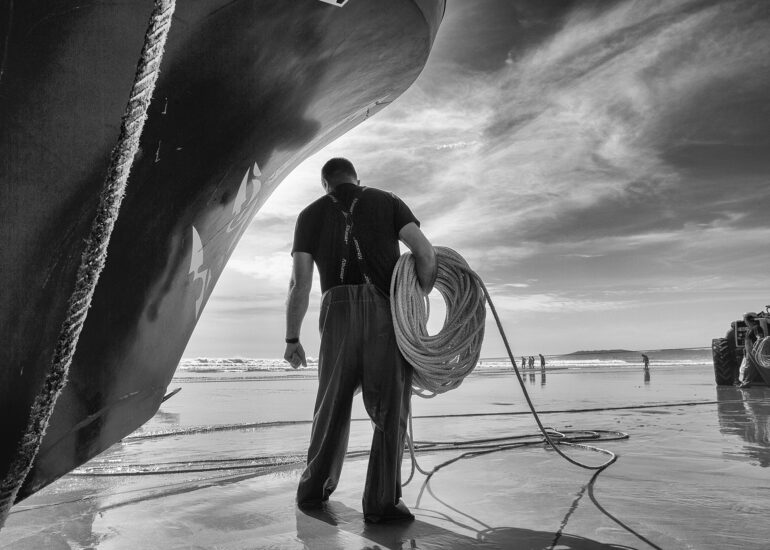
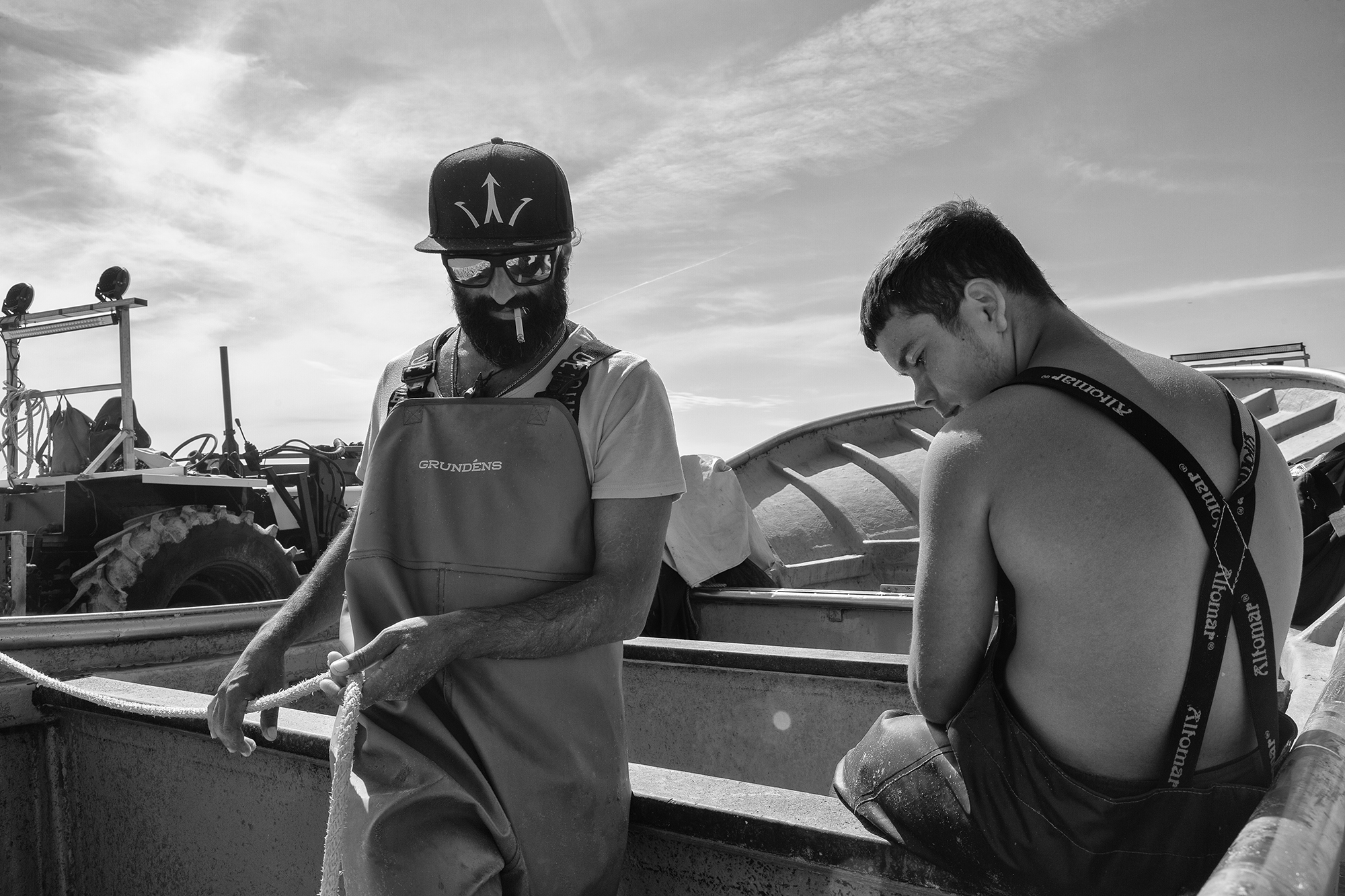
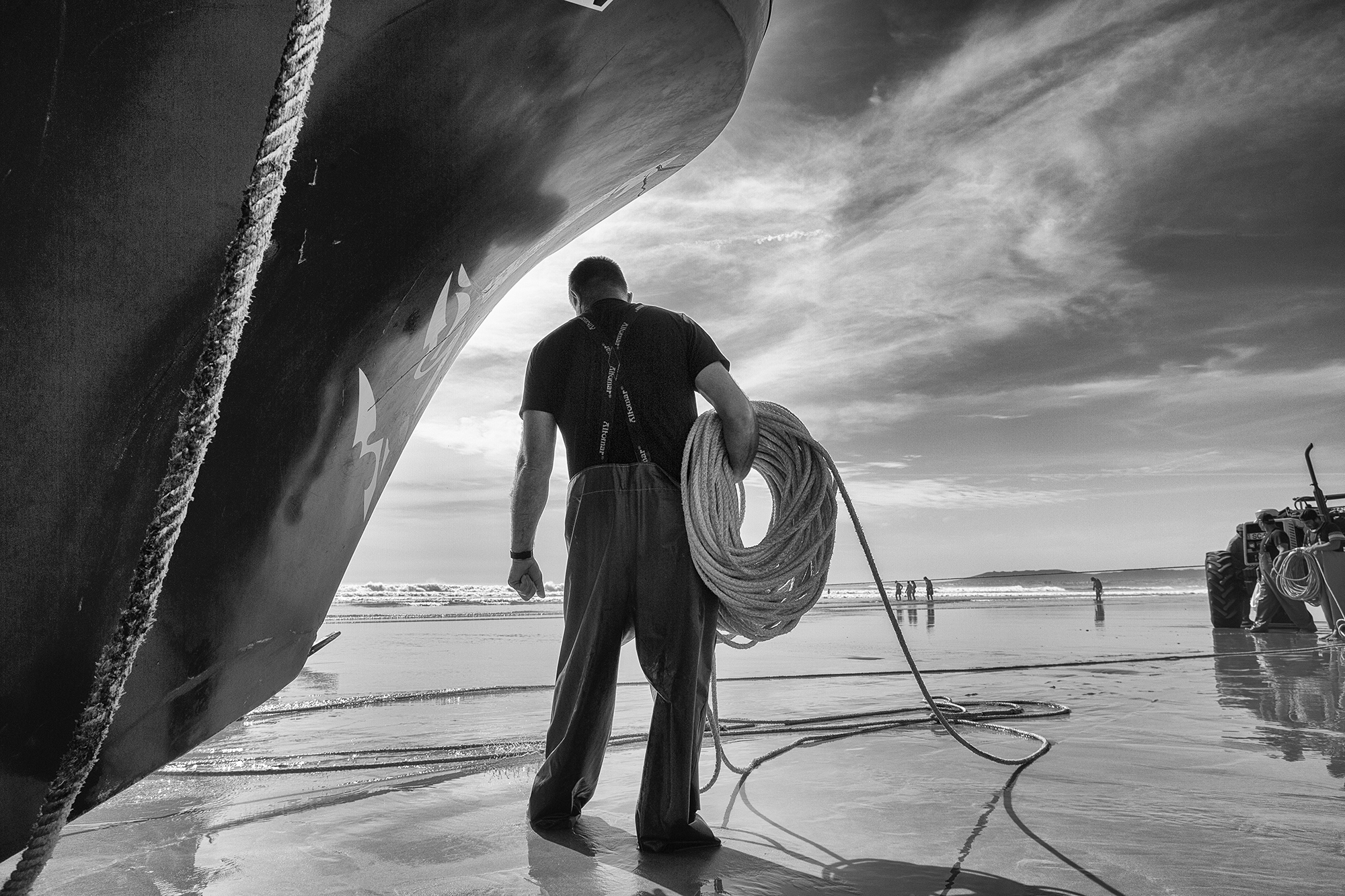
Miguel and his young helper on the “Poseidon” boat. The “captains” of the companha de mar like Miguel have the important role of deciding the route and distance from the beach for each “lanço”, but once back to the beach they also take care of correctly re-storing the ropes tied to the open ends of the net, preparing for the following “lanço”
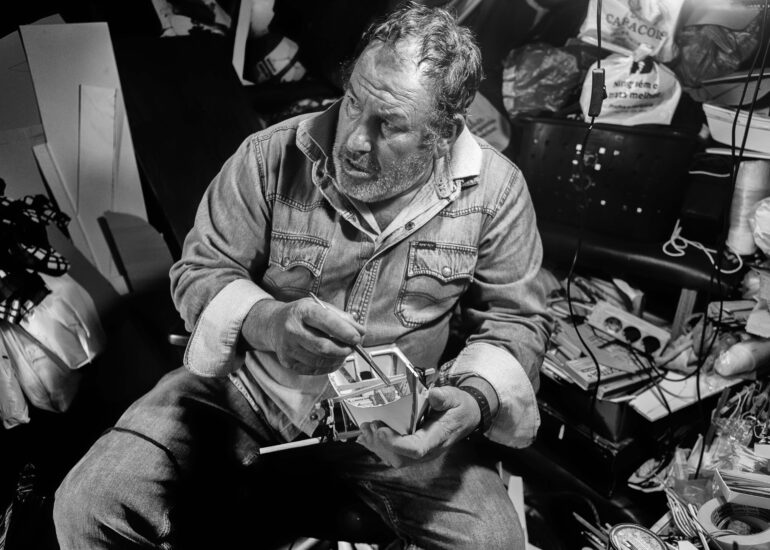
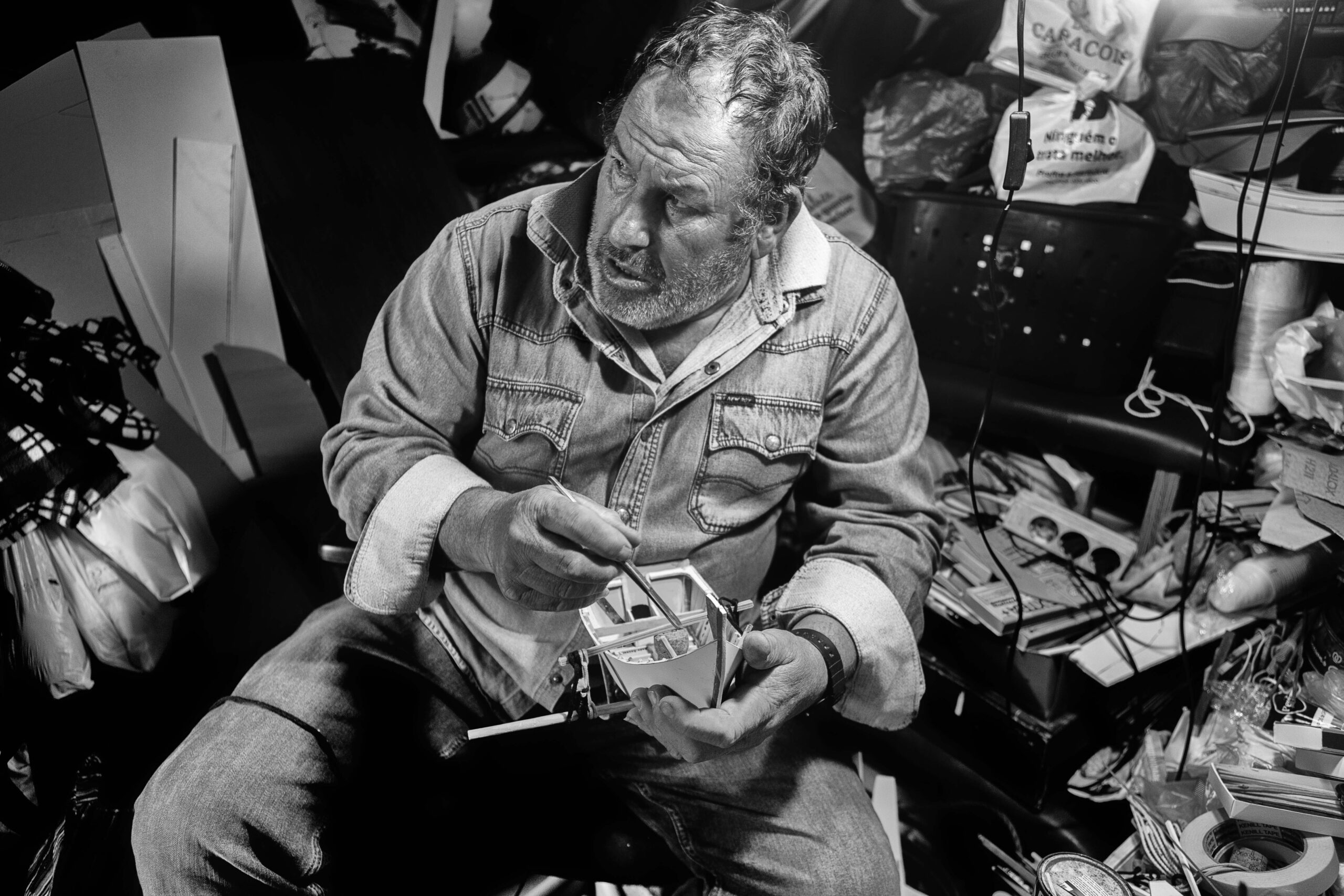
Angelo Carlos works at one of his scale models of arte xávega boats. Working as a fisherman in Costa de Caparica since he was teenager, when he is not out in the sea Carlos likes to craft detailed scale reproductions of those same boats he has been sailing on throughout his life
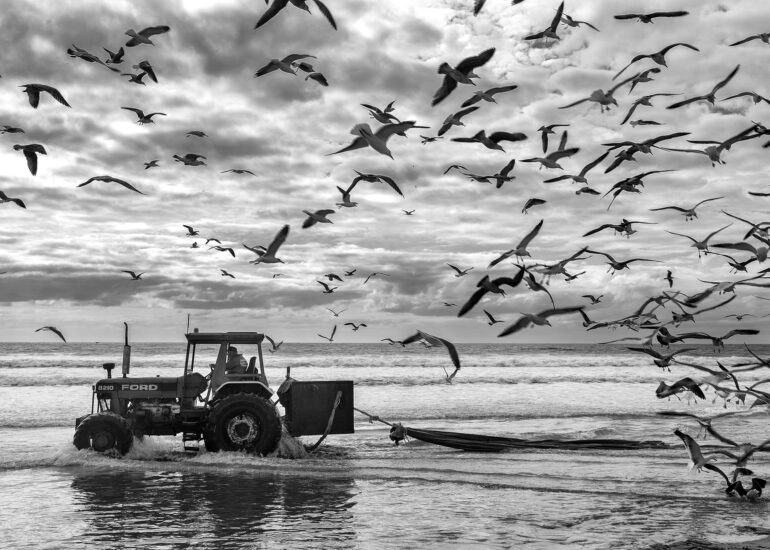
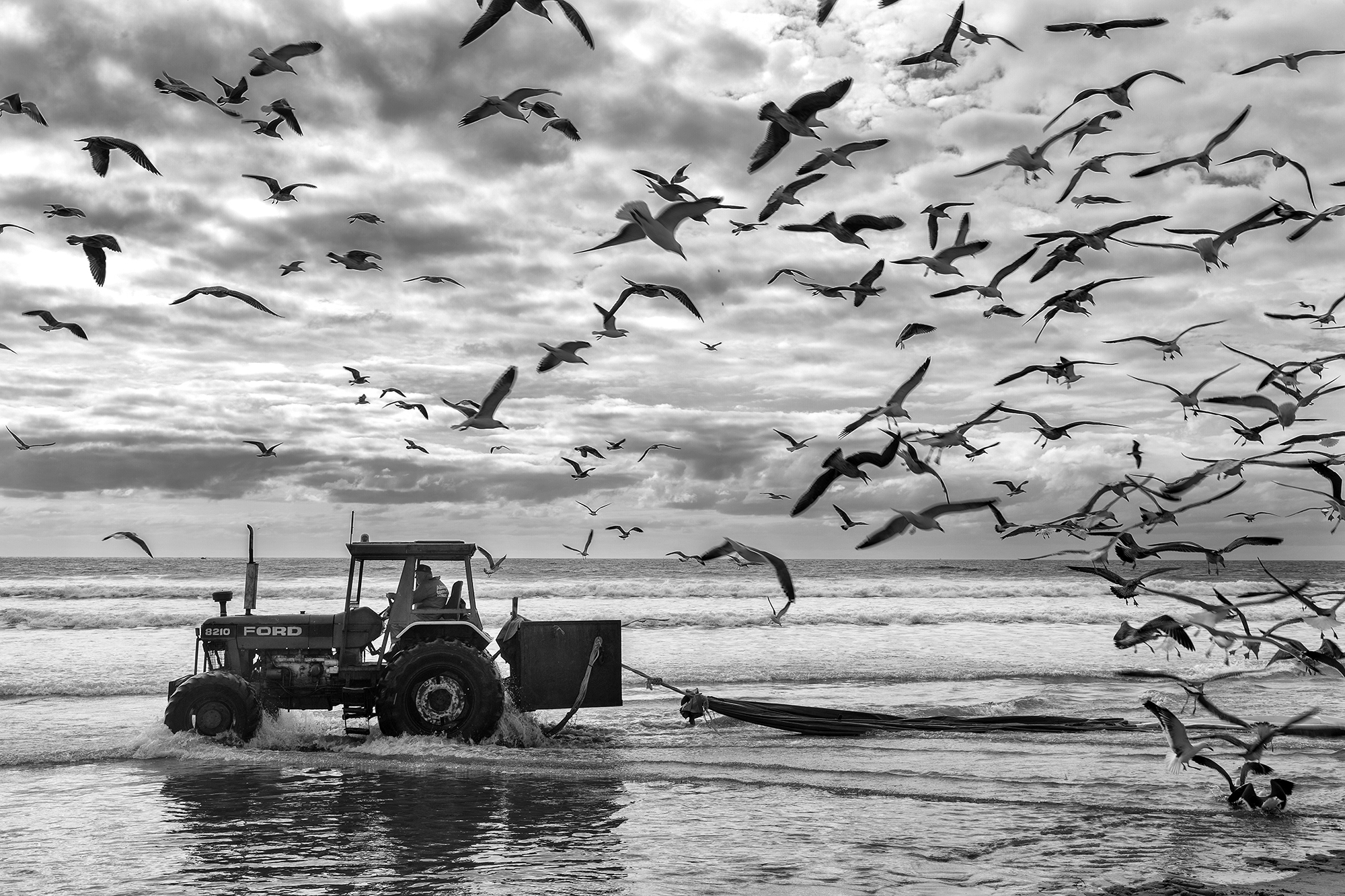
Seagull flock chases the tractor of “Canope” looking for fish leftovers at the end of a “jornada”. Typically at sunset the crew sets up to leave, washing off their equipment into the sea, leaving the seagulls which populate the beach banqueting with any fish remains